Poster · United States · 1943 · World War II
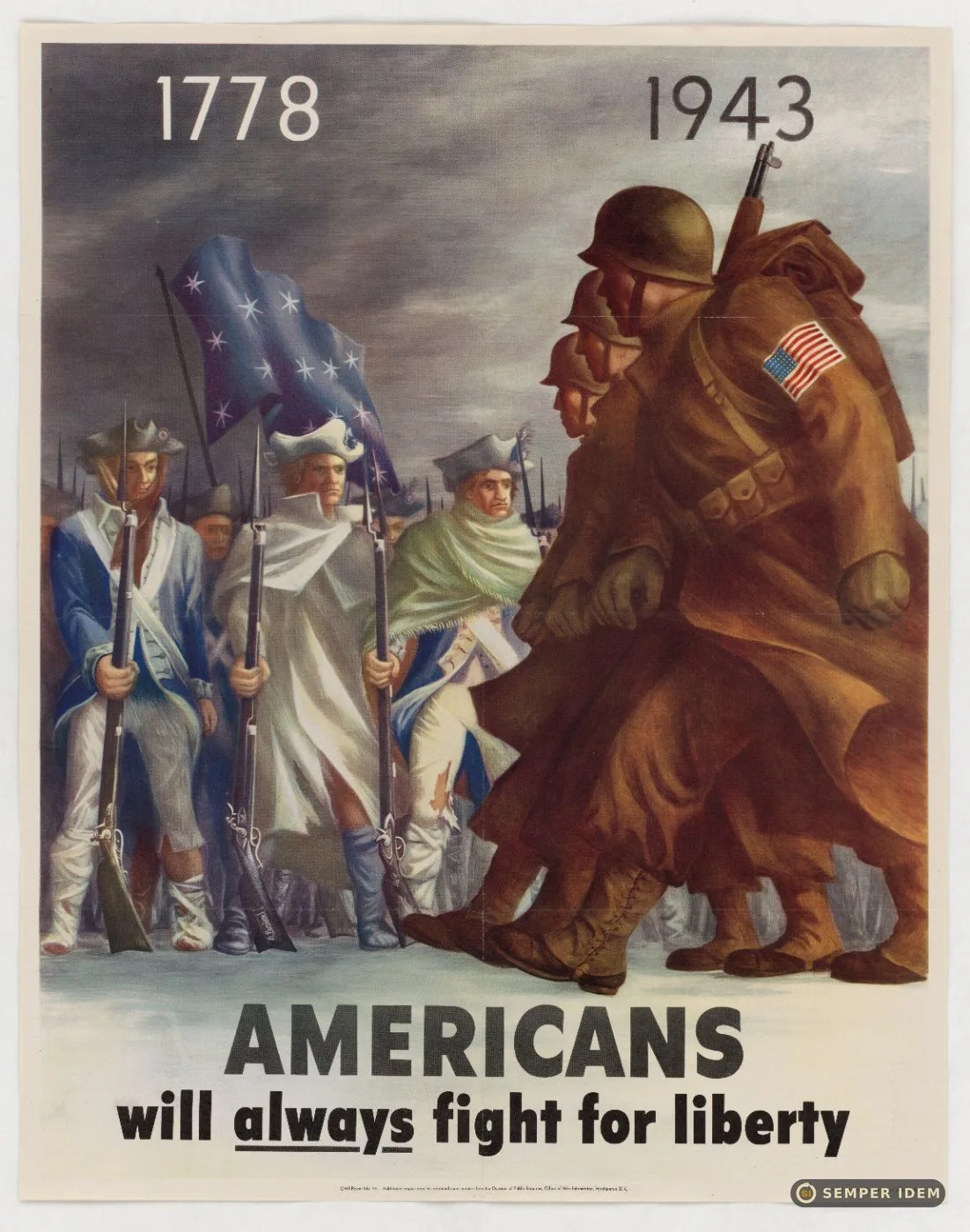
1778 — 1943. Americans will always fight for liberty
To explain why men should go to war in 1943, the poster calls the soldiers of 1778 as witnesses.
- Themes
On the left are Washington’s soldiers after the winter at Valley Forge: tricorn hats, blankets instead of greatcoats, feet wrapped in rags, the thirteen-star flag above them. On the right, infantrymen of 1943 march past in helmets and greatcoats, the US flag on their sleeves. Above them are two dates, 1778 and 1943; below, the slogan: “Americans will always fight for liberty”, with the word “always” underlined.
In the winter of 1777–1778 the Continental Army camped at Valley Forge, Pennsylvania. Food, clothing and shoes were short, and the soldiers suffered from cold and disease. Between 1,700 and 2,000 men died in the six months at the camp. Yet the army held together and marched out in June 1778 ready to fight, so for Americans that winter became a symbol of endurance. By 1943 the United States had been at war for more than a year, and the Office sent the poster to schools, libraries, factories and railway stations.
The poster works by invoking heroic ancestors. The new war is presented not as a beginning but as the continuation of an old cause: the soldiers of 1943 are simply taking up what their great-great-grandfathers began. The ancestors on the poster are not fighting — they stand to one side and watch the new soldiers march by, like veterans at a parade. That gaze works twice: it gives the soldier an heir’s pride and at the same time a duty not to shame those who survived that winter. And the underlined “always” turns tradition into national character: fighting for liberty is not a choice but who Americans are. Though “always” is the poster’s promise, not a law of nature: as late as 1941 the America First movement opposed even aid to the Allies, fearing the US would be drawn into the war, and disbanded only after Pearl Harbor.
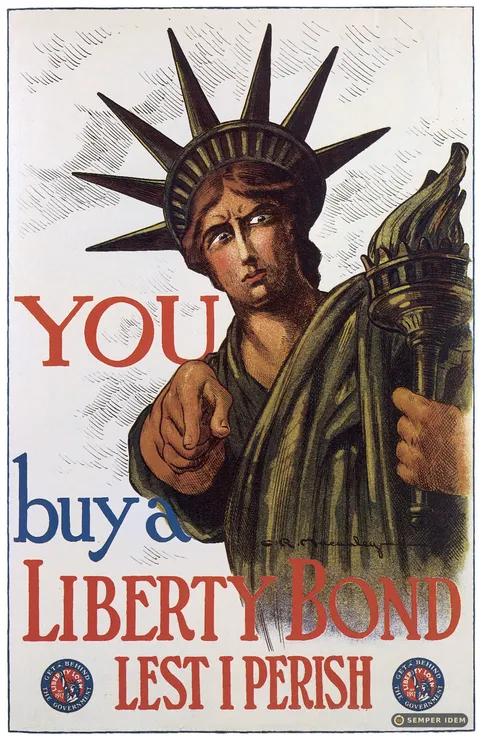
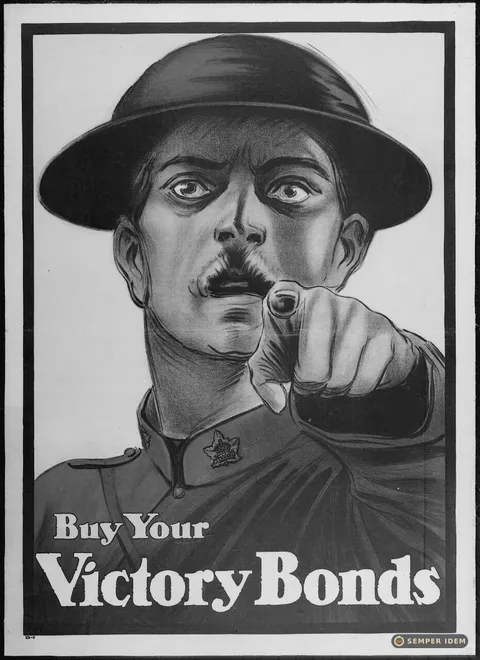
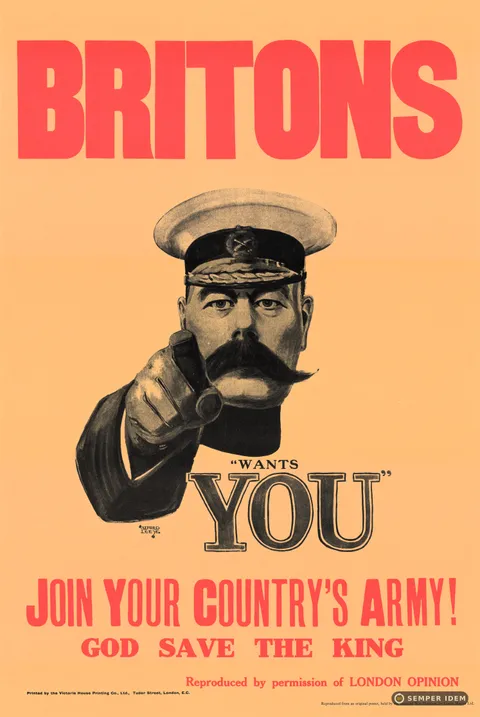
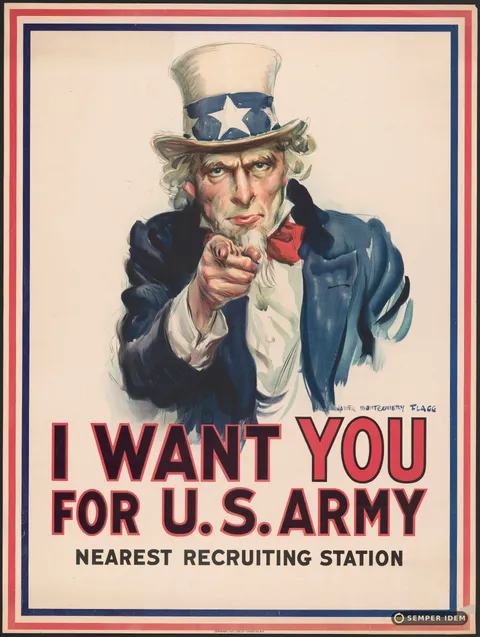
This poster is almost a manifesto for Semper Idem: the techniques do not age; only the dates above them change.
Semper Idem · today’s parallel
The appeal to ancestors works everywhere, but its meaning differs. Ukrainian brigades bear the names “Kholodnyi Yar” and “Black Zaporozhians”. Kholodnyi Yar is the forest from which the haidamaky rose in 1768 and where insurgents held out against the Bolsheviks until 1922. The Black Zaporozhians were the best-known cavalry regiment of the Ukrainian People’s Army (1918–1923). It is the same technique as on the poster: the soldiers of these brigades carry on the cause of those whose struggle was once crushed. The Russian “we can do it again” also appeals to ancestors, but turns the memory of 1945 into a licence for a new war. The technique is the same, the meaning opposite: some call on their ancestors to defend what is theirs, others to justify a campaign against someone else.
Context
USA, 1943. Artist: Bernard Perlin (1918–2014). Publisher: Office of War Information, Poster No. 26, printed by the US Government Printing Office. The Office sent it to schools, libraries, factories and railway stations.
On the left, soldiers of the Continental Army during the winter encampment at Valley Forge (December 1777 – June 1778), where 1,700–2,000 men died in six months. On the right, American infantry of 1943.
Sources
- NARA 513806
- Library of Congress 91784917
- Library of Congress 2017696421
- Bernard Perlin — Wikipedia
- American Battlefield Trust: Valley Forge National Historical Park
- Encyclopaedia Britannica: America First Committee
- АрміяInform: Почесні найменування — 93-тя окрема механізована бригада «Холодний Яр» (in Ukrainian)
- АрміяInform: Військова історія в почесних найменуваннях — 72-га окрема механізована бригада ім. Чорних Запорожців (in Ukrainian)